



WhatsApp remains the world's most popular messaging platform, but millions of users face access restrictions every day. Whether you're traveling abroad, working in a region with strict internet controls, or simply concerned about network surveillance, understanding how a whatsapp vpn works is essential for maintaining communication. A VPN can restore access to WhatsApp when it's blocked and add an important layer of privacy to your internet connection, though it's critical to understand exactly what protection it provides and what it doesn't.
Why WhatsApp Gets Blocked
Governments and network administrators block WhatsApp for various reasons, from political control to network management. According to Freedom House's Freedom on the Net research, messaging platforms face restrictions in dozens of countries worldwide, with WhatsApp among the most frequently targeted applications.
Political and Social Control
Authoritarian regimes often restrict WhatsApp during periods of political unrest, protests, or elections. The platform's end-to-end encryption makes it difficult for governments to monitor communications, leading some to impose blanket blocks rather than allow secure private conversations. During times of social tension, WhatsApp becomes a tool for organizing and sharing information that governments cannot easily surveil.
The Access Now report on internet shutdowns documents how platform-specific blocking has increased, with WhatsApp frequently singled out alongside other encrypted messaging services. These blocks can last hours, days, or become permanent fixtures of a country's internet landscape.
Network-Level Restrictions
Educational institutions, corporate networks, and public WiFi providers sometimes block WhatsApp to manage bandwidth or enforce acceptable use policies. These restrictions operate differently from government censorship but create similar access problems for users who rely on the platform for personal or professional communication.
How a WhatsApp VPN Works
A whatsapp vpn functions by creating an encrypted tunnel between your device and a VPN server, routing all your internet traffic through that server before it reaches its final destination. This process masks your real IP address and encrypts your data, making it difficult for networks to identify or block specific applications.
The Technical Process
When you connect to a VPN before opening WhatsApp, your traffic follows a different path. Your device encrypts all outgoing data and sends it to the VPN server, which then forwards your requests to WhatsApp's servers. The responses follow the reverse path, creating a layer of protection between you and network observers.
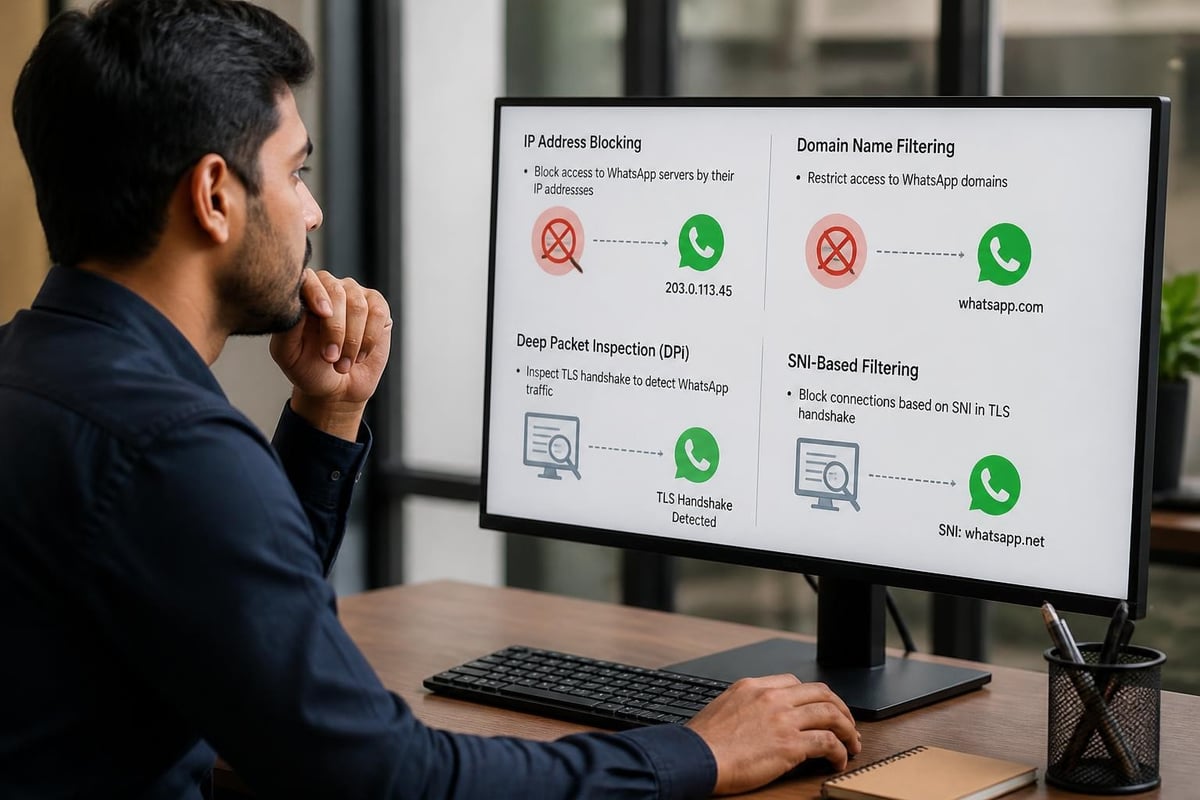
The RFC 9505 survey of censorship techniques details how modern blocking systems use deep packet inspection (DPI), Server Name Indication (SNI) filtering, and IP-based blocking. A properly configured VPN bypasses these methods by hiding the true destination and characteristics of your traffic within the encrypted tunnel.
| Blocking Method | How It Works | How VPN Bypasses |
|---|---|---|
| IP blocking | Blocks WhatsApp server addresses | VPN routes through different IPs |
| DNS filtering | Prevents domain name resolution | VPN uses its own DNS servers |
| DPI/SNI inspection | Identifies WhatsApp traffic patterns | Encryption conceals traffic content |
| Port blocking | Blocks common messaging ports | VPN uses standard HTTPS ports |
For users concerned about comprehensive privacy protection, understanding what is a VPN and why you need one in 2026 provides essential background on how modern VPN technology has evolved to address increasingly sophisticated blocking techniques.
What VPNs Don't Change About WhatsApp
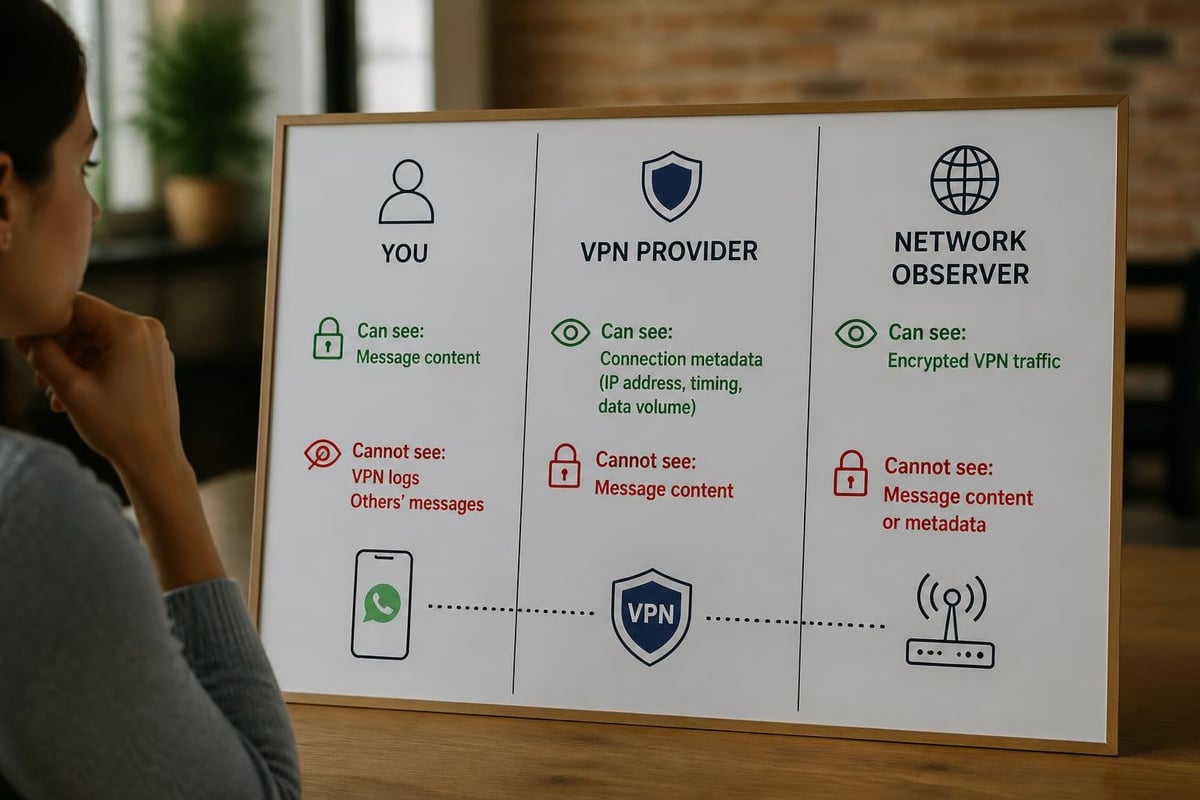
It's crucial to understand that a whatsapp vpn doesn't decrypt or alter WhatsApp's own encryption. As explained in WhatsApp's key transparency documentation, the platform uses end-to-end encryption that ensures only the sender and recipient can read messages. The VPN operates at a different layer, encrypting the network path but never touching WhatsApp's message encryption.
This distinction matters because it means your VPN provider cannot read your WhatsApp messages, but it also means the VPN cannot add extra security to the messages themselves. The VPN protects your metadata and prevents network-level blocking, while WhatsApp's encryption protects message content.
Choosing a WhatsApp VPN Provider
Not all VPN services perform equally when it comes to unblocking WhatsApp. The effectiveness depends on server locations, protocol options, and the provider's ability to evade detection systems.
Critical Features to Evaluate
Server network coverage determines whether you can access WhatsApp from restricted regions. A provider with servers in multiple countries gives you more options when your primary connection point gets blocked. Geographic diversity also reduces latency for better call quality.
Protocol flexibility matters because different networks block different VPN protocols. Modern services offer multiple options:
- OpenVPN (TCP and UDP variants)
- WireGuard for improved speed
- Stealth protocols that disguise VPN traffic
- SSTP and IKEv2 for specific use cases
No-logs policies ensure your WhatsApp usage patterns aren't recorded. When evaluating providers, look for independently audited privacy claims and transparent policies about data retention. ZioFree's strict no-logs policy represents the gold standard for privacy-conscious users who want assurance their communication patterns remain private.
Speed and Reliability Considerations
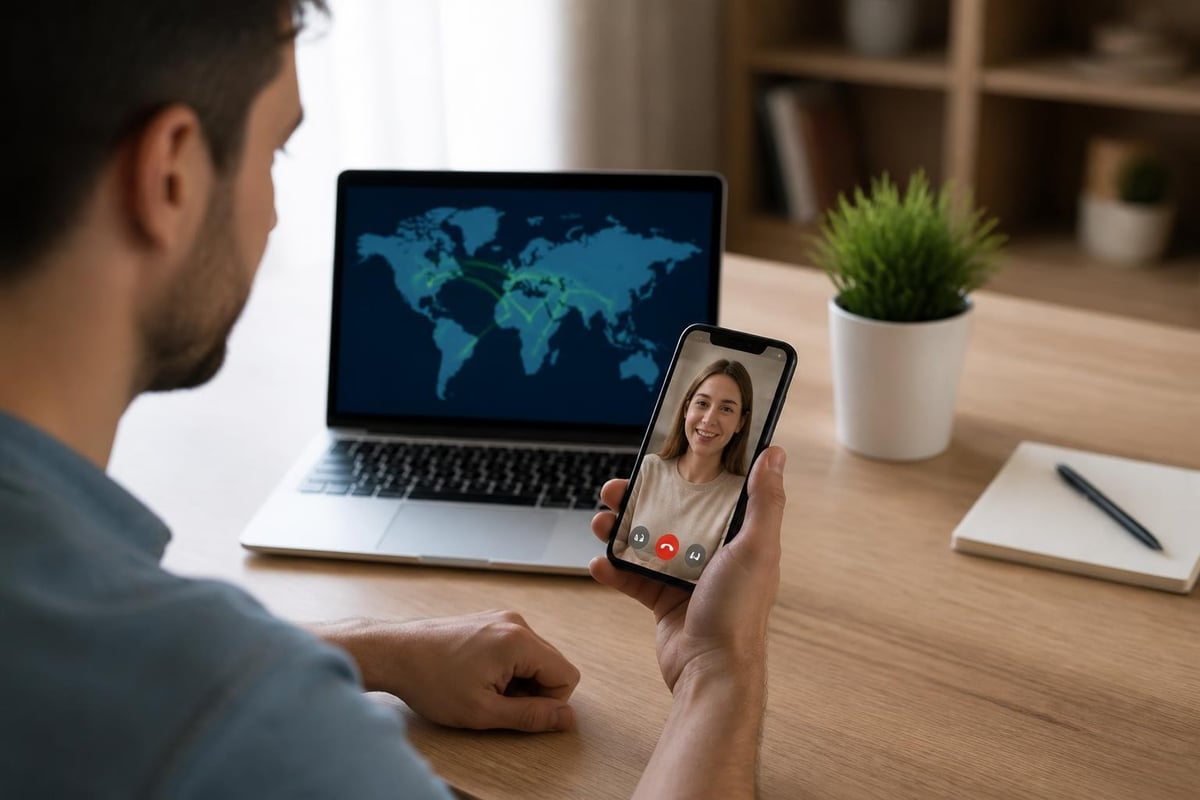
WhatsApp calls and video chats require consistent bandwidth and low latency. A whatsapp vpn that adds significant overhead will degrade your experience, making calls choppy or causing frequent disconnections.
Testing fast VPN service options reveals that server proximity and infrastructure quality directly impact performance. Premium providers invest in high-capacity servers and optimized routing that minimizes the speed penalty of VPN usage.
Setting Up Your WhatsApp VPN Connection
Configuration varies by device and operating system, but the fundamental process remains consistent across platforms. Proper setup ensures reliable access and maximum security.
Mobile Device Configuration
- Download your VPN provider's app from the official app store for your device
- Create an account and sign in with your credentials
- Select an optimal server location based on your needs
- Enable the VPN connection before opening WhatsApp
- Verify connectivity by sending a test message
On Android devices, the VPN implementation framework operates at the system level, intercepting all network traffic including WhatsApp. iOS handles VPN connections similarly, though with slightly different permission models.
Desktop and Web Configurations
WhatsApp Web and desktop applications also benefit from VPN protection. Since these versions run on your computer, you'll need:
- A desktop VPN client installed and running
- The VPN connected before opening WhatsApp Web
- Confirmation that WebRTC isn't leaking your real IP
Desktop VPNs typically offer more configuration options than mobile apps, allowing advanced users to fine-tune protocols and routing rules for optimal WhatsApp performance.
Security Considerations and Limitations
While a whatsapp vpn provides meaningful privacy benefits, understanding its limitations prevents false confidence in your security posture.
What VPNs Protect Against
VPNs effectively shield you from several surveillance and blocking vectors:
- Network administrator monitoring of which sites and services you access
- ISP tracking of your browsing and communication patterns
- Geographic restrictions that prevent WhatsApp access
- Public WiFi snooping where attackers might intercept unencrypted traffic
These protections apply to the network layer, creating a secure tunnel that prevents observation of your internet activities. For context on when this protection matters most, reviewing the 5 signs your public WiFi isn't as safe as you think highlights common vulnerabilities that VPNs mitigate.
VPN Detection and Blocking
Advanced censorship systems increasingly target VPN traffic itself. The research on OpenVPN fingerprinting demonstrates that even encrypted VPN protocols can be identified through traffic analysis, timing patterns, and protocol characteristics.
According to the Internet Society's policy brief on VPN restrictions, some governments now actively block VPN services, creating a cat-and-mouse dynamic where providers must constantly adapt to maintain accessibility.
| Detection Method | How It Identifies VPNs | Counter-Measures |
|---|---|---|
| IP blacklisting | Known VPN server addresses | Regular IP rotation |
| Port analysis | Common VPN port patterns | Port obfuscation |
| Deep packet inspection | Protocol fingerprints | Stealth/obfuscation protocols |
| Traffic timing | VPN-specific patterns | Traffic shaping |
The Trust Factor
Using a whatsapp vpn requires trusting your VPN provider with your metadata. While they cannot read your encrypted WhatsApp messages, they can see when you connect to WhatsApp servers, how much data you transfer, and potentially correlate your activities over time.
This makes provider selection critical. Services with transparent privacy policies and third-party audits offer more accountability than providers making unverifiable claims about their logging practices.
Legal and Ethical Considerations
The legality of using a whatsapp vpn varies dramatically by jurisdiction, and users must understand their local context before circumventing restrictions.
Where VPNs Are Restricted or Banned
Several countries have enacted laws restricting or prohibiting VPN use, particularly when used to bypass government censorship. China, Russia, Iran, and the UAE have implemented various degrees of VPN restrictions, from requiring government approval to outright bans on unauthorized services.
Even where VPNs remain legal, using them to access blocked services might violate local laws or terms of service agreements. The EFF's guide to understanding and circumventing network censorship provides practical guidance on assessing risks in different jurisdictions.
Corporate and Institutional Policies
Organizations that block WhatsApp on their networks often have legitimate reasons related to productivity, bandwidth management, or security. Using a whatsapp vpn to bypass these restrictions might violate employment agreements or acceptable use policies, potentially resulting in disciplinary action.
Before circumventing workplace restrictions, consider whether the risk aligns with your needs and whether alternative solutions might better serve your situation.
Advanced Configuration for Enhanced Security
Power users can optimize their whatsapp vpn setup for maximum privacy and reliability through advanced configurations and protocol selection.
Protocol Selection Strategy
Different VPN protocols offer varying balances of speed, security, and stealth:
OpenVPN remains the most widely supported protocol with excellent security properties, though it can be detected by advanced DPI systems. Both TCP and UDP variants have specific use cases, with TCP offering better reliability over unstable connections at the cost of some speed.
WireGuard delivers superior performance through modern cryptography and streamlined code, making it ideal for WhatsApp voice and video calls where latency matters. Its leaner protocol design often outperforms OpenVPN in speed tests while maintaining strong security.
Stealth and obfuscation protocols disguise VPN traffic as regular HTTPS, making it harder for censorship systems to detect and block. These protocols trade some performance for improved reliability in heavily restricted environments.
Split Tunneling Configuration
Some users prefer routing only WhatsApp traffic through the VPN while allowing other applications to access the internet directly. This split tunneling approach reduces VPN bandwidth usage and can improve performance for applications that don't require privacy protection.
However, split tunneling introduces complexity and potential security risks if misconfigured. Traffic leaks can expose your WhatsApp usage to the very networks you're trying to avoid, defeating the purpose of VPN protection.
Real-World Performance Factors
Understanding what affects whatsapp vpn performance helps optimize your setup for the best possible experience.
Server Location Impact
Geographic distance between you, the VPN server, and WhatsApp's infrastructure directly impacts latency. For example:
- Connecting from Europe to a North American VPN server to access WhatsApp adds transcontinental latency
- Using a nearby server in a country without WhatsApp blocks minimizes delay
- Server load and infrastructure quality matter as much as distance
Testing different server locations helps identify the optimal balance between access reliability and performance. Premium providers like those offering high-speed VPN access maintain infrastructure designed to minimize these trade-offs.
Encryption Overhead
All VPNs add some computational overhead for encryption and decryption. Modern devices handle this easily for messaging, but video calls push bandwidth requirements higher. The encryption algorithms used, processing power available, and network conditions all influence whether you'll notice performance impact.
Current-generation protocols like WireGuard minimize this overhead through efficient design, making them particularly suitable for bandwidth-intensive WhatsApp features like group video calls.
Troubleshooting Common Issues
Even properly configured VPN connections sometimes encounter problems accessing WhatsApp. Systematic troubleshooting can identify and resolve most issues.
Connection Failures
If WhatsApp won't connect through your VPN:
- Verify the VPN is actually connected and not silently disconnected
- Try a different server location in case your current server is blocked
- Switch VPN protocols as some work better than others in restricted networks
- Check for DNS leaks that might expose your actual location
- Restart both the VPN app and WhatsApp to clear any cached connection data
Performance Problems
Slow message delivery or poor call quality usually stems from:
- Excessive server load requiring switching to a less congested server
- Suboptimal routing that can improve by selecting geographically closer servers
- Protocol inefficiency for your specific network conditions
- Bandwidth throttling by your ISP that affects VPN traffic
Testing your connection with and without the VPN activated helps isolate whether the VPN introduces the performance issue or whether underlying network problems exist.
Detection and Blocking
If networks detect and block your whatsapp vpn traffic:
- Enable obfuscation features if your VPN offers them
- Switch to protocols that better disguise VPN characteristics
- Use alternative ports that aren't commonly associated with VPN traffic
- Consider providers that regularly update server IPs to stay ahead of blacklists
Understanding how deep packet inspection works helps you appreciate why some networks successfully identify VPN traffic and what technical measures providers implement to avoid detection.
Privacy Beyond the VPN
A whatsapp vpn provides network-level privacy, but comprehensive security requires attention to other factors that might compromise your privacy.
Device Security Fundamentals
Your VPN connection becomes irrelevant if malware on your device logs your activities or someone gains physical access to your phone. Basic security hygiene includes:
- Keeping your operating system and apps updated
- Using strong authentication (biometrics, complex passwords)
- Being cautious about app permissions
- Avoiding suspicious links and attachments
Metadata Awareness
Even with a VPN, some metadata remains visible. Your WhatsApp contacts, group memberships, and communication patterns create a social graph that exists independently of message content. While WhatsApp's end-to-end encryption protects message content, metadata can reveal significant information about your relationships and activities.
Multi-Layered Privacy Approach
Maximizing privacy requires combining tools and practices:
- VPN for network privacy to hide your traffic from local networks and ISPs
- End-to-end encryption (built into WhatsApp) for message content
- Strong authentication to prevent unauthorized device access
- Careful sharing practices to limit metadata exposure
This layered approach, where each tool addresses specific threats, provides more robust protection than relying on any single technology. Resources like guides to secure VPN services explain how VPNs fit into a broader privacy strategy.
A whatsapp vpn serves as an essential tool for maintaining communication access and protecting your network privacy in an increasingly restricted internet landscape. By routing your traffic through encrypted tunnels and masking your actual location, VPNs bypass blocks while preventing local surveillance of your messaging activities. Whether you're traveling, working in a restricted environment, or simply valuing your privacy, understanding how VPNs work and their limitations ensures you make informed choices about your digital security. ZioFree delivers the high-speed, secure VPN access you need with a global server network, strict no-logs policy, and advanced protocols designed specifically to protect against sophisticated surveillance and blocking techniques.